To identify the battery in a used EV, establish the exact model year and battery variant, then compare its factory specification with the manufacturer's technical data. Gross capacity describes the pack's total rated energy; usable or net capacity describes the portion available for driving. Neither figure, on its own, tells you the battery's present condition.
That is why two adverts can quote different numbers for essentially the same battery, while two cars wearing similar badges can have genuinely different packs. Resolve the specification first. Assess health and realistic range afterwards.
What is the difference between gross and usable battery capacity?
Battery energy is measured in kilowatt-hours, written kWh. Manufacturers may quote a gross figure for the battery and a smaller net or usable figure reflecting the operating window made available to the vehicle.
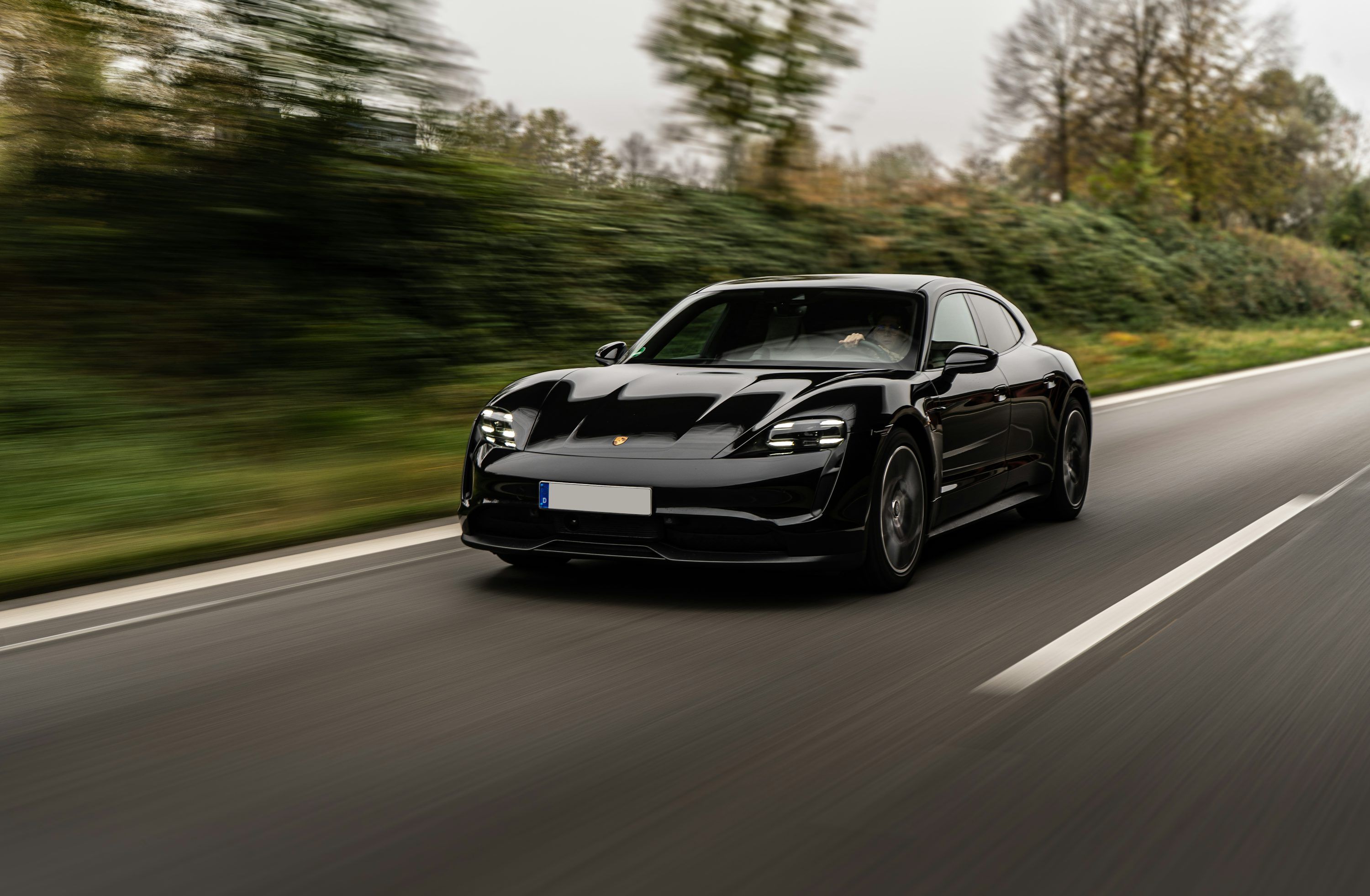
The distinction is visible in Porsche's February 2024 Taycan Turbo technical sheet: the stated energy content is 105kWh gross and 97kWh net. These are two descriptions of that specification, not two different battery options. The document relates to the German/EU model and notes that national specifications may differ.
When comparing cars, put like figures alongside like figures. A gross number from one advert and a usable number from another will distort the comparison. If a listing simply says “100kWh battery”, ask the seller which measurement and official specification it refers to.
Why a model badge is not enough
Manufacturers can offer more than one battery for a model, and change capacities during its production life. The same marketing description may also outlive a technical update.
Porsche's 2021 announcement of the rear-wheel-drive Taycan for the US describes a 79.2kWh gross battery and an optional 93.4kWh gross Performance Battery Plus. Its February 2024 technical sheet for the updated entry Taycan instead gives 89kWh gross and 82.3kWh net for the specification shown.
Those dated examples explain why “Taycan battery size” needs a more precise answer than a single number. Apply the same discipline to any EV: identify its generation, derivative, market and battery option before using a capacity figure from a search result.
A practical battery-identification checklist
- Match the VIN to the vehicle. Use the car itself and its documents. Registration year alone can conceal a model-year transition.
- Establish the original variant. Check the order documentation or available factory record for the battery option and exact derivative. Data coverage varies; a report may not state both gross and usable capacity.
- Find matching technical data. Record the source date and whether the figure is gross or usable. Avoid mixing a current brochure with an earlier car.
- Ask about replacements. Request invoices or manufacturer documentation for any replacement battery. The original build record describes the starting specification, not every later repair.
- Assess current condition separately. Obtain an appropriate battery-health assessment and interpret it with its test method, date and vehicle details.
If the available factory record does not resolve the battery variant, ask the manufacturer or a suitably equipped specialist to identify it from the VIN and vehicle records. Do not turn a missing field into a confident guess.
Capacity, health and range answer different questions
Original capacity describes the specification. Battery health concerns the battery's present condition relative to an appropriate reference. Range describes how far the car can travel under particular conditions. Treating these as interchangeable is the easiest way to overvalue a used EV.
An illustrative calculation shows the distinction: 60kWh of usable energy at an average 3.5 miles per kWh gives 210 miles. That is arithmetic, not a forecast for a specific car. Temperature, speed, heating, route and reserve all affect what is achievable on a journey.
Likewise, a dashboard range estimate is not a battery-capacity test. Ask how an advertised range was obtained. A formal test-cycle figure, the seller's summer commute and a winter motorway journey are different reference points.
Do not confuse kW with kWh
kWh measures energy capacity. kW measures power, including charging power. A larger battery does not automatically make an EV quicker to charge, and a high peak charging-power figure does not tell you how long that rate can be sustained.
For a useful comparison, record the usable battery capacity, supported AC and DC charging, and a manufacturer charging-time example with its stated conditions. Our EV charging calculator can help explore charging assumptions once you have the correct vehicle figures.
Frequently asked questions
Does 100% on the dashboard mean the whole gross capacity is available?
No. The displayed charge percentage relates to the vehicle's managed charging window; it should not be read as permission to use every kWh of its gross rated capacity.
Can a VIN check tell me battery health?
A factory-specification check is not a battery-health test. It may help identify the original battery variant, but current condition requires separate evidence.
Should I always buy the largest battery?
Compare the price with the journeys you actually make, your charging access and the condition of the individual car. Extra capacity is useful only in the context of those needs.
Use our guide to what a build sheet contains to understand the original-specification evidence. For a Taycan, start with the Porsche factory-specification check, then add the technical sheet and current battery assessment before making your decision.