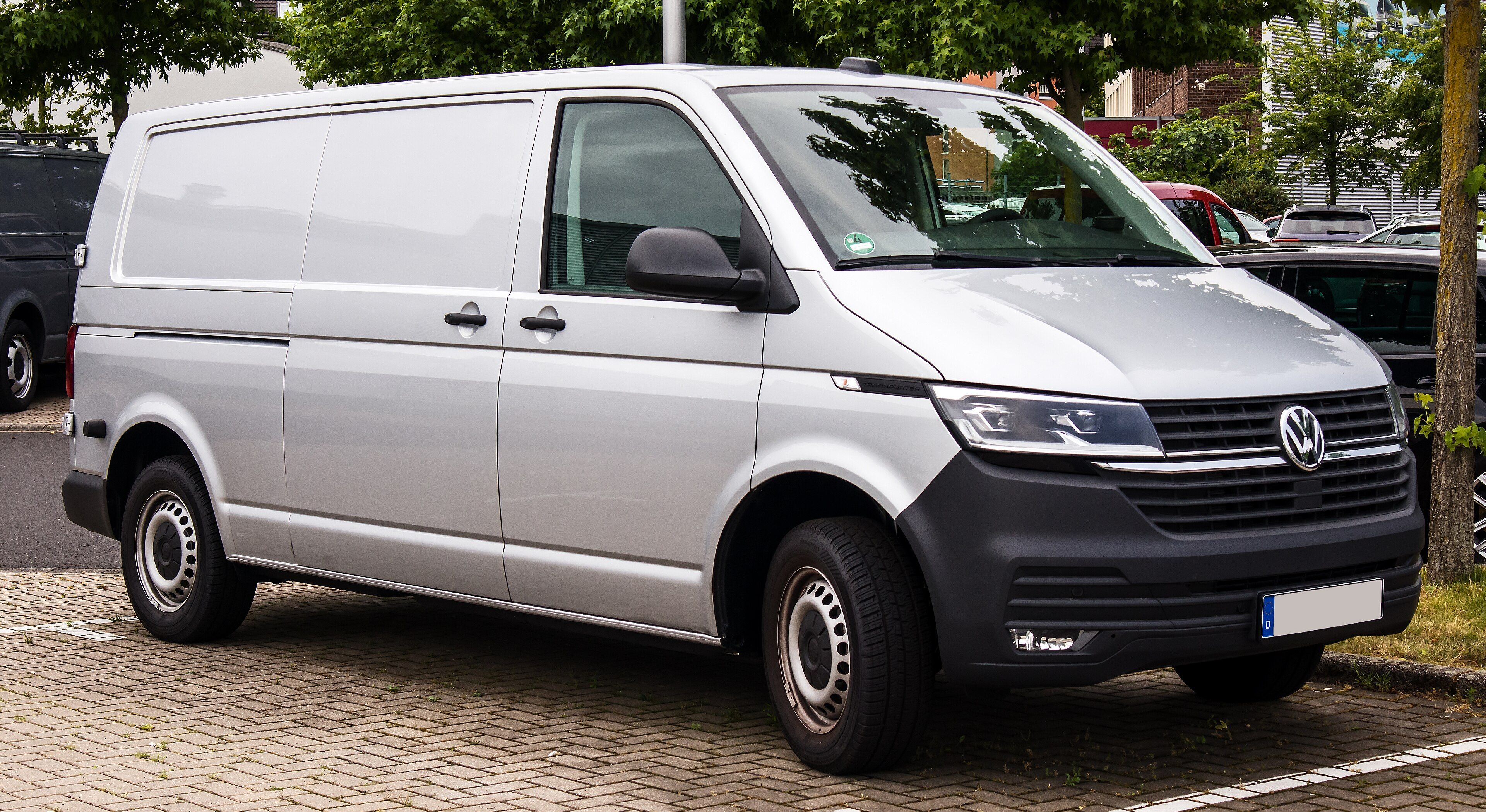
T28, T30 and T32 are Volkswagen Transporter weight designations. They are not engine sizes, wheelbases or payload figures. On many T6.1 versions they correspond to gross vehicle weights of 2,800kg, 3,000kg and 3,200kg respectively, but newer Transporter specifications show why you must check the exact vehicle rather than treating the badge as a precise legal limit.
For anyone buying a work van or a camper-conversion base, the most important number is the usable carrying capacity of the individual vehicle in its current configuration. A factory specification helps you establish the starting point; it does not weigh the converted van.
What the T-number tells you
Gross vehicle weight is the permitted total weight of the vehicle and its load, rather than the load alone. GOV.UK's vehicle-weight explanation also calls this maximum authorised mass and explains that it is normally shown on the vehicle's plate or sticker.
The Volkswagen UK Transporter T6.1 brochure dated March 2021, preserved in an archive, gives the familiar T28/T30/T32 weights in its variant tables. It also lists different unladen weights and payloads for different engines, transmissions and specifications.
Consequently, two vans carrying the same T-number can have different published payloads. A heavier transmission or equipment configuration uses some of the total permitted weight before you load any tools, passengers or camping equipment.
Why newer Transporters need a fresh check
Do not assume that a familiar designation always maps to precisely the same number. Volkswagen's Transporter brochure with pricing valid from 15 January 2026 includes examples of T30 panel vans at 3,025kg and T32 versions at 3,225kg.
The filename of a downloaded brochure is not reliable evidence of its generation: read the document title, models and publication details inside it. An old-looking link can point to a replacement document.
Use a matching generation and derivative table, then confirm the plate on the actual van. Also investigate any documented uprating or down-plating rather than assuming the original badge describes its current approved limits.
Payload: the calculation that matters
For a practical loading check, compare the permitted total weight with the vehicle's actual weight in a clearly defined condition. Be explicit about what is already aboard: driver, passengers, fuel, water, tools and removable equipment.
For illustration only, a vehicle with a 3,000kg permitted total and an actual measured weight of 2,500kg in its present condition has 500kg of total-weight headroom. Anything added afterwards uses that headroom. This arithmetic does not establish that each axle remains within its limit.
Volkswagen's Kombi technical explanation notes that quoted payload is influenced by trim, factory options and fitted accessories. A brochure figure should therefore not be treated as a current weighbridge result.
Six details to establish before buying
- Identity and generation: verify the VIN and production period.
- Original body configuration: establish panel van, Kombi or other variant rather than relying on present-day windows and seating.
- Wheelbase and roof: check the actual configuration; T32 does not mean long-wheelbase.
- Engine and transmission: record the exact version, including drivetrain where relevant.
- Permitted weights: inspect vehicle, axle and, if relevant, train-weight information.
- Current measured weight: obtain evidence appropriate to the intended use, especially after a conversion.
An available Volkswagen factory build-sheet report can support the original-configuration checks. Its contents depend on available records; do not assume every report contains all plated weight or approval information.
What changes when a van becomes a camper?
Furniture, a roof conversion, leisure batteries, water systems and other equipment can change the vehicle's actual weight and its distribution. The original factory payload is no longer a complete answer.
Ask for conversion documents and a recent weight record, with an explanation of what was aboard when it was weighed. If the seller quotes a payload figure, ask how it was calculated. “It is a T32” does not establish how much capacity remains after the conversion.
Use the factory record to understand the starting vehicle and conversion records to understand the changes. Our guide to comparing current and factory specification explains that distinction.
Questions buyers ask
Does T32 mean a 3,200kg payload?
No. The designation relates to a gross-weight class, including the vehicle itself. It does not describe the load you can add.
Does a higher T-number mean a larger engine or longer van?
No. Engine, wheelbase and weight designation are separate specifications.
Can I use a build sheet instead of the vehicle plate?
No. Original equipment information does not replace current plated limits, approval records or a weight measurement.
Choose the van for its intended job
List the people and equipment you expect to carry, establish the actual vehicle specification and check the relevant weights. That is a much better basis for selecting a Transporter than choosing a T-number in isolation.
Cover photograph: © M 93 / Wikimedia Commons, Volkswagen Transporter T6.1, licensed under CC BY-SA 3.0 DE. Source-provided resized image; display cropping may vary by layout. The photograph remains under the same licence.
