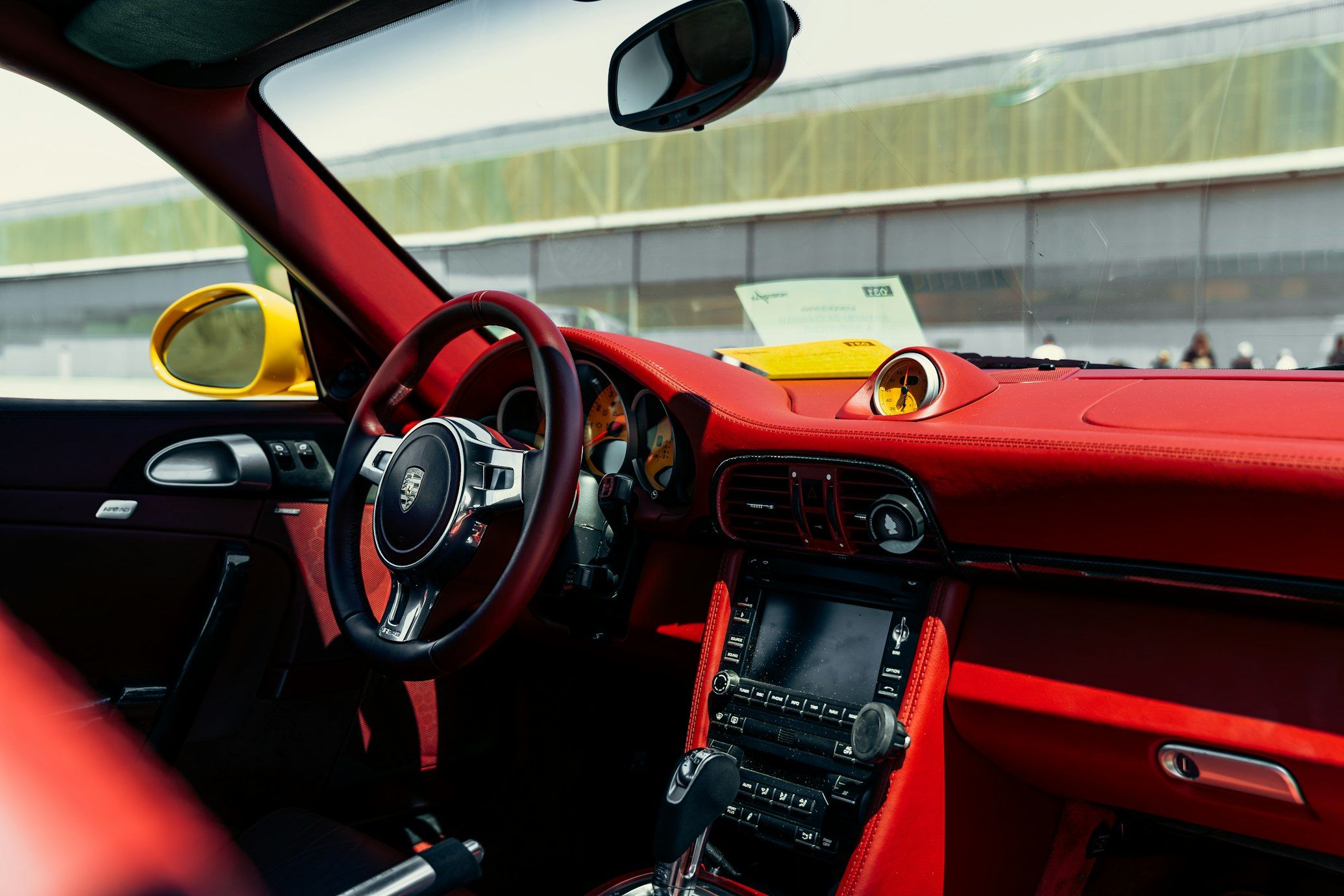
To check whether a Porsche has Sport Chrono, confirm its original equipment against the VIN, then compare the result with the controls and functions appropriate to that model, year and gearbox. A dashboard stopwatch is useful supporting evidence. It does not, on its own, establish that the complete package was fitted at the factory or remains functional.
This matters because Sport Chrono is a package of features, not simply a piece of dashboard furniture. Its contents have changed over time, and manual and PDK cars do not necessarily offer the same functions. This guide concentrates on modern 911 and 718 models; use the same checking method, rather than the same equipment assumptions, for other Porsche ranges.
What does Sport Chrono actually add?
Sport Chrono changes how a suitably equipped car lets you select and use its performance settings. Depending on the model, that can involve additional driving modes, a steering-wheel mode selector, timing functions and changes to powertrain or chassis behaviour. The exact list belongs to the specific generation.
Porsche's 2015 announcement for the updated 911 Carrera 4 range describes a steering-wheel mode switch supplied with optional Sport Chrono. On PDK versions, its central Sport Response button temporarily sharpened the drivetrain's response. That is a useful identification example, not a specification to apply to every Porsche built before or after it.
Nor should you assume that Sport Chrono includes a sports exhaust or every desirable chassis option. Equipment that works together in a driving mode can still have been ordered separately.
Start by identifying the car precisely
Before searching for switches or option numbers, establish the model generation, production period, original market and transmission. A registration year is a starting point, but cars registered in the same year can straddle a model update.
- Record the VIN from the vehicle and check it against the paperwork.
- Establish whether you are looking at a 991, 992 or another 911 generation, or the relevant Boxster/Cayman generation.
- Record the gearbox and full derivative, including Carrera, S, GTS or other designation.
- Use a brochure or manual for that generation and market.
If you need help with the identifier, our guide to finding your VIN explains where to look. Do not base a purchase on a code list copied from a different generation.
Read the factory equipment description
Look for the manufacturer's Sport Chrono description in the original order documentation or available factory equipment record. Read the wording beside the code, rather than matching a number from memory. Porsche's terminology and code formats vary between production periods.
A Porsche factory build-sheet report can help establish the recorded original specification where data is available. It is particularly useful when an advert's equipment list has been generated from a generic model database.
Check standard equipment as well as paid options. Porsche's 2022 announcement for the 911 Carrera T, for example, lists Sport Chrono as standard. A seller's failure to identify a separate paid option does not settle whether a feature was supplied.
Use the controls as a cross-check
With the correct manual beside you, compare the car's dashboard, steering wheel and available settings. On relevant models, a mode selector and the expected mode display support the factory record. Earlier cars require their own generation-specific checks; do not reject one simply because it lacks a later steering wheel.
Porsche's US launch information for the 2017 718 Boxster similarly describes a steering-wheel mode switch with Sport Chrono and a Sport Response button for PDK cars. The gearbox qualification matters: a manual car should not be judged against a PDK control checklist.
Ask for clear photographs before travelling, then inspect the same features in person. Photos can establish which controls appear to be present; a proper inspection establishes whether the installed systems work. There is no need to attempt a launch-control demonstration or an aggressive road test to identify the specification.
What if the clock and the paperwork disagree?
A mismatch is a reason to investigate. A dashboard, steering wheel or other component may have been changed. A later retrofit may also have documentation of its own. Conversely, an incomplete equipment record can omit useful detail.
Ask the seller for the original invoice, a Porsche Centre equipment confirmation and any retrofit invoices. Keep two questions separate: was it built with Sport Chrono? and what is fitted and operational now? Our guide to spotting changes from factory specification explains that distinction.
Questions buyers ask
Does the dashboard stopwatch prove Sport Chrono is fitted?
No. It is a visible clue that should agree with the factory record and the generation-specific equipment. A single component cannot verify an entire package.
Does every Porsche with Sport Chrono have Sport Response?
No. Availability depends on the model, generation and transmission. Check the relevant manual instead of applying a later PDK car's feature list to an earlier or manual car.
Can a build sheet prove the system works?
No. It describes available original build data. Present condition, later alterations and correct operation require inspection.
Before you agree a price
Keep a copy of the advertised specification, match the VIN to the records and resolve any discrepancy before treating Sport Chrono as part of the purchase. If the seller can support the claim with both documentation and the correct equipment, you have a much firmer basis for comparing that Porsche with another.