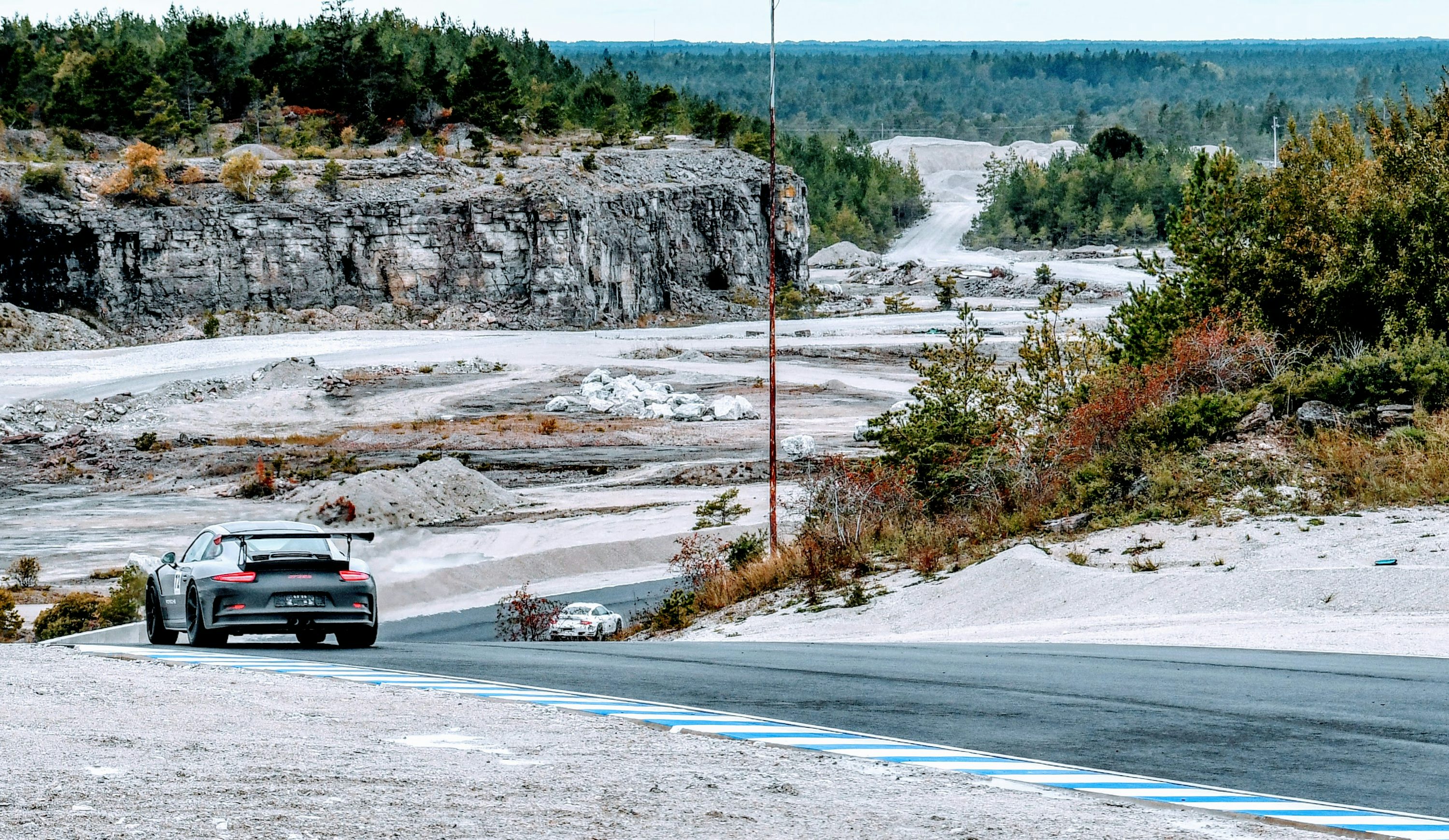
PASM is Porsche's adaptive damping system. PASM Sport suspension is a specific chassis configuration offered on selected models, typically with a lower ride height and a more sporting setup. Selecting a Sport damping setting does not turn ordinary PASM hardware into PASM Sport suspension.
That distinction is easily lost in an advert. A seller may write “sports suspension” because the car has a suspension button, because it sits low, or because a brochure uses similar language. To compare cars properly, you need the exact factory description and a model-specific reference.
What PASM changes
Porsche Active Suspension Management adjusts damping in response to driving conditions and the selected setting. Dampers control how the suspension moves; they are not simply a switch between two fixed ride heights. Porsche's PASM explanation describes the system's continuous response to inputs from the car.
For a buyer, the practical distinction is between the system's operating mode and the car's physical specification. An adaptive damper can offer different settings while retaining the same springs and basic ride-height configuration.
What PASM Sport means—and why the millimetres need context
PASM Sport is not one identical suspension kit used throughout the Porsche range. Its specification and quoted lowering depend on the model and the baseline Porsche is comparing it with.
For example, Porsche's US launch material for the 2017 718 Boxster describes optional PASM with a 10mm reduction against standard suspension and PASM Sport with a 20mm reduction on the Boxster S. A “20mm” description in that context should not be carried over to a 911.
Porsche's 2024 911 Carrera GTS chassis information describes a 10mm-lowered PASM sports suspension on the Carrera GTS, including model-specific spring and damper changes. These examples explain the terminology; they do not establish the equipment of a particular used car.
Three descriptions to separate
- PASM: the adaptive damping technology, with specification dependent on the vehicle.
- PASM Sport suspension: a particular factory chassis configuration where offered.
- Sport mode: an operating setting, which may change damping, powertrain response or other functions according to equipment.
Air suspension, rear-axle steering, active anti-roll technology and torque-vectoring equipment introduce further distinctions. They should have their own entries in your comparison. A car described as having “all the chassis options” deserves a list, not an assumption.
How to identify the original suspension
1. Establish the exact derivative
Write down the generation, body style, engine derivative, build period and original market. A Coupe and Cabriolet, or a Carrera and GTS, need not share the same standard equipment. Use the production date where available rather than relying solely on first registration.
2. Find the full factory wording
Read the original order, available equipment record or Porsche build sheet. Look for the suspension description and any stated lowering. If a report contains only an abbreviated description, seek clarification rather than expanding it into a more valuable option.
3. Compare it with the correct brochure
The brochure establishes what Porsche offered for that derivative and period; the individual record helps establish what the car received. Our factory option-code guide explains why standard equipment and optional equipment can both appear in the same record.
4. Inspect the car's current hardware
A specialist can check whether the fitted suspension is consistent with the record, including evidence of replacement components or later lowering. This is especially important when the seller mentions springs, coilovers or a suspension refurbishment.
Why appearance and ride feel are not enough
Photographs do not provide a reliable ride-height measurement. Wheel and tyre combinations, camera angle, road surface and vehicle loading all influence the impression. A low stance cannot distinguish a factory configuration from later changes.
A test drive answers a different question: whether the car suits you and whether it behaves as expected. Tyre condition, pressures, road surface and worn components can influence the ride. A firm-feeling car is not proof of PASM Sport, and a comfortable one is not proof that adaptive damping is absent.
Ask a specialist to investigate warnings, unusual noises or inconsistent operation. The factory record does not diagnose a damper fault. If you suspect alterations, read our guide to checking a car against its original specification.
Questions buyers ask
Does pressing the suspension Sport button prove PASM Sport?
No. It can identify an operating setting on an equipped car, but it does not establish the full chassis configuration. Check the original equipment description.
Is PASM Sport always 10mm lower?
No universal figure applies across every Porsche. The amount and comparison baseline depend on the model and generation.
Is PASM Sport automatically the better used-car choice?
Not for every driver. Consider your roads, clearance needs and preferences, then compare condition as carefully as specification. A documented option does not remove the need for a satisfactory inspection.
Make your comparison specific
Instead of writing “PASM: yes” against both cars, record the exact suspension description, the source supporting it and any subsequent changes. That small improvement turns an ambiguous option list into a useful buying comparison.