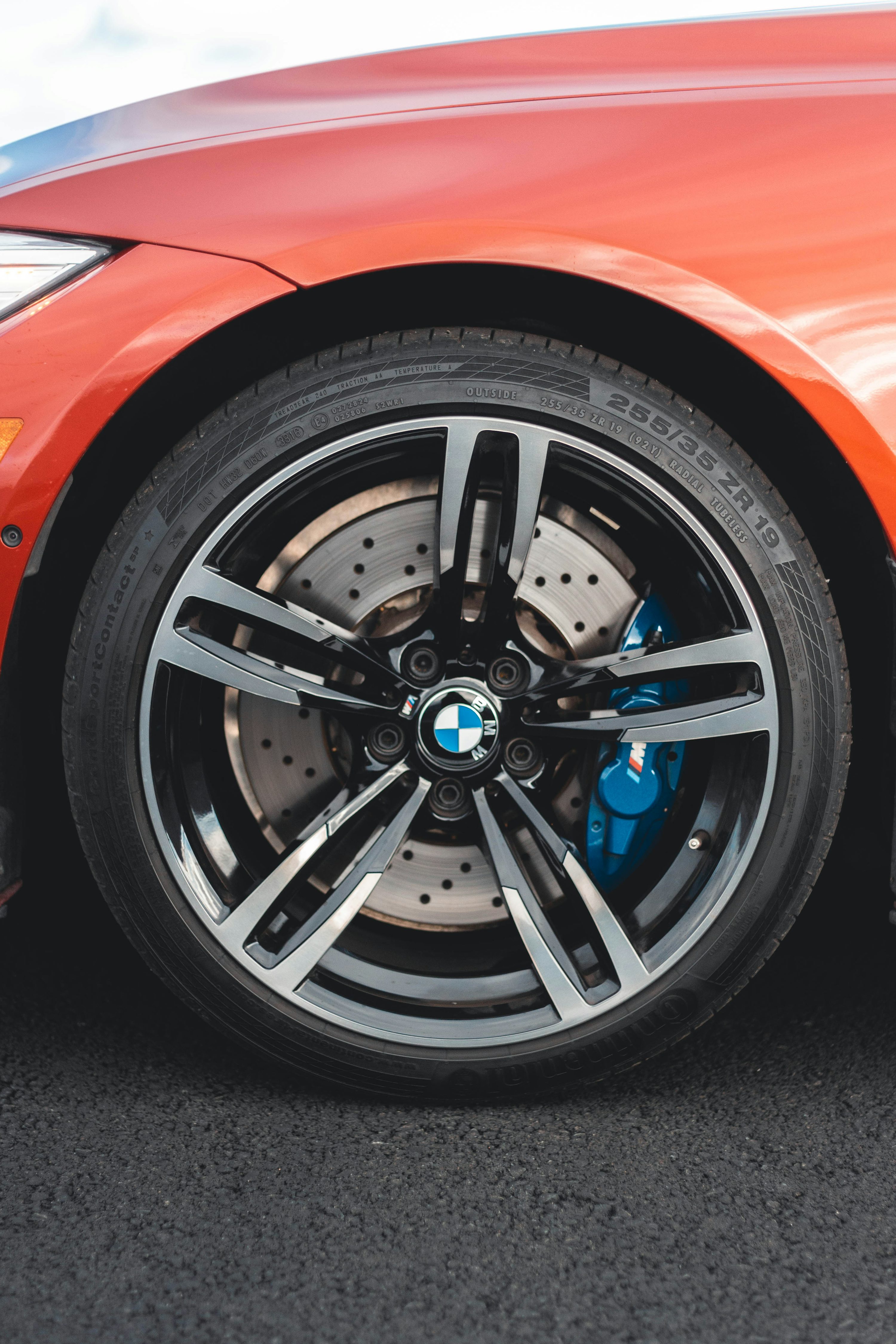
The most useful starting point is your BMW's VIN-linked equipment record: look for an explicit adaptive-suspension description, then verify it against the model's documentation and the car itself. M Sport trim or a Sport driving mode alone does not prove that adaptive dampers were fitted.
Suspension names are easy to confuse because BMW uses several technologies across its ranges. This guide focuses on identifying factory equipment, with the G20 3 Series as a documented example. It is not a claim that every BMW uses the same system, option code or menu.
M Sport suspension and Adaptive M Suspension are different specifications
On the launch-generation G20 3 Series, BMW described Adaptive M Suspension as an alternative to the M Sport suspension, using electronically controlled dampers. The UK launch information also placed Adaptive M Suspension within the M Sport Plus package.
That example explains why “it is an M Sport” is not a complete answer. Trim describes a collection of equipment; a suspension description identifies a particular part of the car. Later packages, plug-in hybrids and other BMW model families need their own checks.
BMW's technical explanation of Adaptive M Suspension describes electronically controlled valves changing damping forces. Those dampers are physical components. A driving-mode menu cannot establish that every necessary component is present and functioning.
Step 1: identify your model and production period
Start with the full model, generation, powertrain and original sales market. “2020 3 Series” is less useful than a VIN-linked identification of the specific derivative. First registration and production can fall in different periods, particularly around a facelift or specification change.
Keep the VIN in your notes and check it against both the vehicle and the paperwork. If a seller supplies a specification screenshot, make sure it belongs to that car. Our VIN location guide can help you find the identifier.
Step 2: read the equipment description, not just a code
Search the available build record for suspension and damping entries. Preserve the complete wording and code together. Do not treat an online list of “BMW suspension codes” as universal: different platforms and production periods can describe different systems.
A BMW build-sheet report can help establish the available original equipment record. For context on how BMW records packages and individual items, see our existing BMW option-code guide.
An explicit adaptive-suspension entry is useful evidence. Its absence from an incomplete list is less decisive. If the report is abbreviated or the wording is ambiguous, ask a BMW Centre to confirm the suspension specification against the VIN before treating the answer as settled.
Step 3: compare the controls with the correct manual
Use the handbook for the model to locate its driving-mode and chassis settings. A separate adjustment for damping can support the equipment record, but menu names vary. Do not reject a car because it lacks a screen shown in a video of a different generation.
Equally, changing from Comfort to Sport can alter other aspects of the driving experience. A sharper throttle response or different gearshift behaviour does not demonstrate that the dampers changed.
BMW's suspension FAQ also distinguishes Adaptive M Suspension from Adaptive M Suspension Professional. That US reference explains the terminology; use the corresponding local specification to establish what was offered on a UK car.
Step 4: establish what is fitted now
Factory equipment is a historical baseline. A previous owner may have replaced adaptive dampers, fitted a different suspension kit or had changes made to the car's coding. Conversely, a legitimate later installation will not necessarily appear in the original build record.
On eligible cars, also check digital activation. BMW's UK ConnectedDrive listing for Adaptive M Suspension offers a software activation that adds a Sport setting for the electronically controlled dampers. Availability is shown after signing in and adding the vehicle. The presence of suitable hardware does not by itself prove that this upgrade is active: ask for the current service status and purchase duration as well as the factory record. This does not mean software can turn ordinary passive dampers into adaptive ones.
Ask for invoices and have a suitably qualified specialist check the actual components, relevant electronic connections and diagnostic information. Avoid crawling beneath an unsupported car to look for a connector. Visual inspection is useful only when it is safe and interpreted correctly.
A discrepancy is not automatically evidence of dishonesty. It is an unresolved specification question. Our guide to changes from factory specification explains how to approach it.
A useful checklist for a viewing
- Does the VIN match the record being shown?
- Does the factory description explicitly identify the relevant adaptive system?
- Do the controls and menus agree with the handbook for that model?
- Are there suspension warnings or unexplained modifications?
- Can the seller provide invoices for suspension work?
Use the test drive to assess comfort, noises and operation, rather than trying to identify hardware by feel alone. Tyres and road surfaces can obscure differences, and worn components can make either suspension type disappointing.
Questions owners ask
Does every M Sport BMW have adaptive suspension?
No. M Sport equipment varies by model and period. Establish the individual suspension specification rather than relying on the trim badge.
Is the Sport button enough to tell?
No. Driving modes can change other vehicle settings. Check the factory description and the correct model's controls together.
Can a build sheet confirm the dampers are healthy?
No. Original specification and present condition are separate questions. Inspection and, where appropriate, diagnostics are needed for condition.
When comparing two BMWs, write down the exact suspension system and any documented changes. That is more useful than ticking a vague “sports suspension” box on an advert.