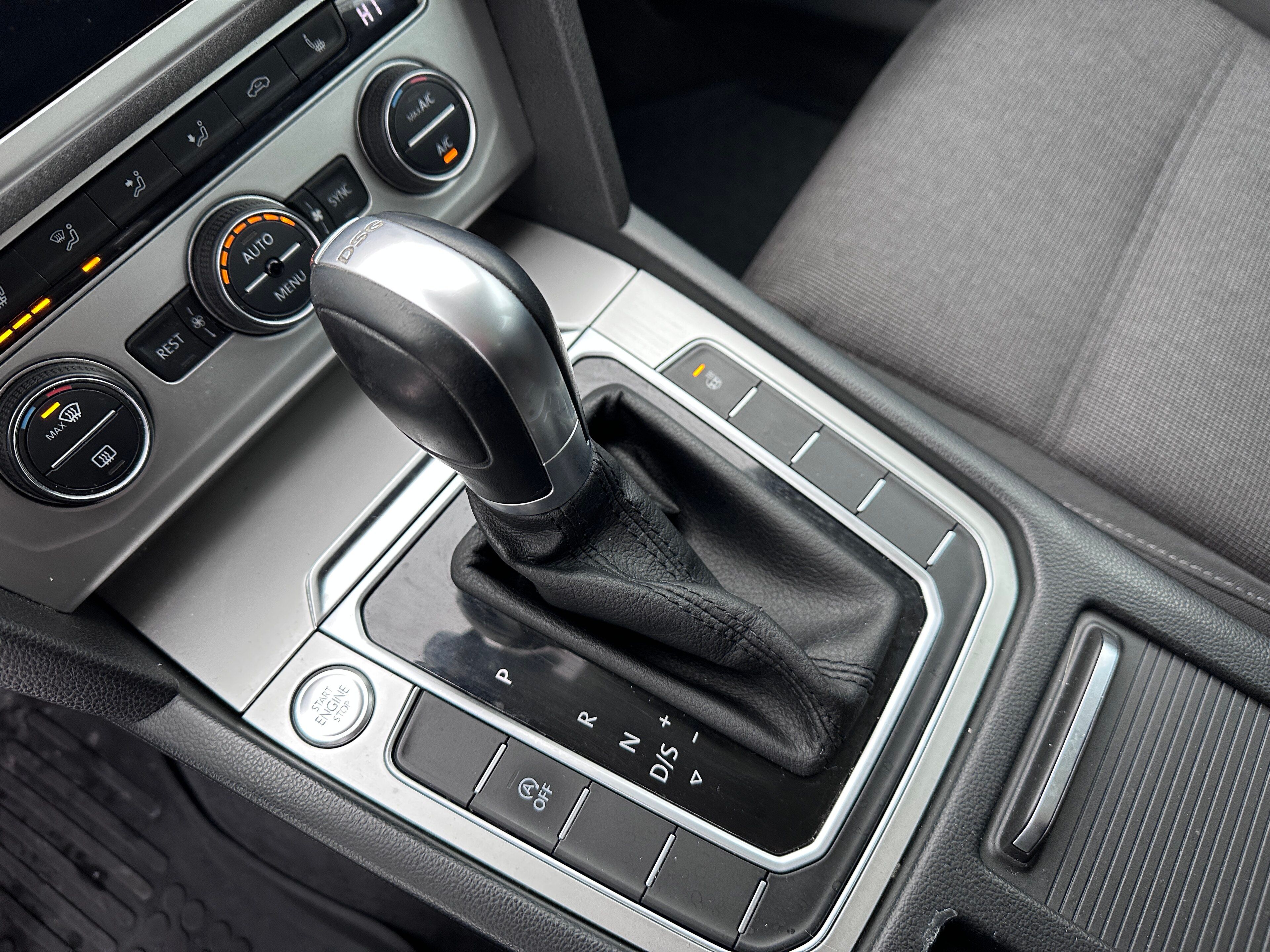
Identify a Volkswagen DSG gearbox by matching the VIN-linked vehicle specification with the gearbox's recorded identifier and the correct technical information. The number of gears is not enough. “Seven-speed DSG” describes a broad characteristic, not one universal transmission with a single clutch design or service schedule.
This distinction matters when buying a used car, checking maintenance or ordering parts. A generic gearbox answer can send you towards the wrong service requirement or component even when the car's model and engine size seem correct.
Why six-speed versus seven-speed is not enough
Volkswagen's 2008 DSG technical presentation contrasts the dry-clutch seven-speed unit introduced at that time with its existing wet-clutch six-speed gearbox. It illustrates why DSG describes a family of products, rather than one universal clutch arrangement.
You should therefore avoid rules such as “all seven-speed DSGs are dry-clutch” or “this engine always has that gearbox”. The relevant production period, engine output, drivetrain and model application need to be checked.
Transmission family and gearbox code answer different questions
A family designation such as DQ200 or DQ381 identifies a transmission type at a useful general level. More specific identifiers distinguish particular versions and applications. A parts supplier or repairer may need that more detailed information, along with the VIN and production date.
Keep the wording and code exactly as shown in the record. Do not turn a generic “automatic transmission” entry into a precise DQ-family claim simply because a similar car used that unit.
Two manufacturer examples show why the details matter
Volkswagen's November 2020 Golf Variant technical information for Germany identifies DQ200 for the described 1.0 eTSI. Its January 2026 German-market Golf GTI Edition 50 factsheet identifies DQ381-7F.
Both descriptions involve seven forward gears, but they are not the same transmission identification. These are dated examples, not a lookup chart for every Golf. Use the same level of specificity when researching your own car.
A practical identification sequence
1. Establish the full vehicle identity
Record the VIN, engine variant and output, model generation, production period and whether the car has front-wheel drive or an all-wheel-drive configuration. Registration year alone can be misleading around production changes.
2. Read the available factory transmission entry
Check the original documentation or an available Volkswagen build-sheet report. Some records provide detailed identifiers; others may only provide a transmission description. Treat the latter as a starting point rather than pretending it answers every technical question.
3. Check the vehicle data and supporting documents
Where a vehicle data sticker or service documentation is present, look for the gearbox identifier. Layout and availability vary, so use model-specific documentation to locate it. Our Audi and Volkswagen PR-code guide explains the broader factory-data context.
4. Ask a Volkswagen retailer or specialist to resolve ambiguity
Give them the VIN and the identifier you found. If the purpose is parts selection or a repair, ask them to confirm the actual fitted unit rather than relying exclusively on the original build.
5. Check for a replacement gearbox
A replacement or rebuilt transmission may have its own documentation. Ask for invoices, unit identification and any relevant warranty details. The original factory record does not update itself merely because a later owner had work carried out.
Use the identification to check servicing—not to guess it
Once the unit is identified, obtain the applicable service requirements for that model, gearbox and market. Do not apply a single online DSG oil-change interval to every transmission.
Ask whether the recorded maintenance covered the required work, with the appropriate specification of fluid and any associated items. An invoice saying “gearbox service” is less informative than one that clearly identifies the work and materials used.
Our guide to verifying full service history explains how to build a maintenance timeline. A build sheet establishes original specification; it does not prove that the required gearbox service happened.
What the badge and selector cannot tell you
A DSG badge or familiar selector can help identify the broad transmission type, but it cannot establish every internal version. Nor can the feel of a brief test drive tell you the exact gearbox code.
Use a test drive and inspection to assess behaviour and condition. If there are warning messages, unusual engagement or unexplained noises, have them investigated instead of treating a favourable gearbox reputation as reassurance about that individual car.
Quick answers
Are all seven-speed Volkswagen DSG gearboxes the same?
No. Manufacturer documents identify different transmission families and applications with seven gears.
Can the VIN itself reveal every gearbox detail?
The VIN is the identifier used to retrieve vehicle-specific records. A basic VIN decoder and a detailed factory record do not necessarily provide the same information.
Is a build sheet enough to order gearbox parts?
It can help identify original specification, but parts should be confirmed against the exact application and the unit currently fitted, particularly if replacement work is possible.
The useful final answer is a documented transmission identification and a matching service requirement—not simply “DSG, seven-speed”.
Cover photograph: Volkswagen Passat B8 DSG selector, by Acgskup / Wikimedia Commons, licensed under CC BY 4.0. Source-provided resized image; display cropping may vary by layout.
